
Most conversations about infection control in a medical office focus on what happens at the surface level — disinfecting exam tables, wiping down high-touch areas, keeping hand sanitizer stocked. All of that matters. But there’s a system running quietly above the ceiling tiles that shapes infection risk just as much, and it rarely makes the cleaning checklist: your HVAC.
Heating, ventilation, and air conditioning does far more than keep a waiting room comfortable. In a clinical environment, it controls the air patients and staff breathe all day — how often that air is exchanged, how well it’s filtered, how humid it gets, and which direction it flows between rooms. When those variables drift out of range, the office doesn’t feel broken. It just quietly becomes a less safe place to deliver care. And because the failure is invisible, it’s the kind of problem a busy practice tends to discover only after a complaint, an inspection finding, or a stretch of staff calling in sick.
This guide breaks down how HVAC affects infection control in a medical office, the maintenance that keeps the system doing its job, and why treating HVAC as an afterthought is one of the more expensive mistakes a practice can make.
Why HVAC is an infection-control system, not just a comfort system
In a home or a standard office, HVAC has one job: temperature. In a medical office, the same equipment is doing infection-control work whether anyone is managing it that way or not. Four functions matter most.
Air exchange and ventilation
Every hour, a portion of the air in each room should be replaced with fresh or filtered air. This dilutes airborne particles — including respiratory droplets and aerosols — and carries them out of the space. Waiting rooms, where sick and well patients share the same air for extended periods, are especially dependent on adequate ventilation. When airflow is weak or a system is undersized for the patient volume it now serves, particles linger longer than they should.
Filtration
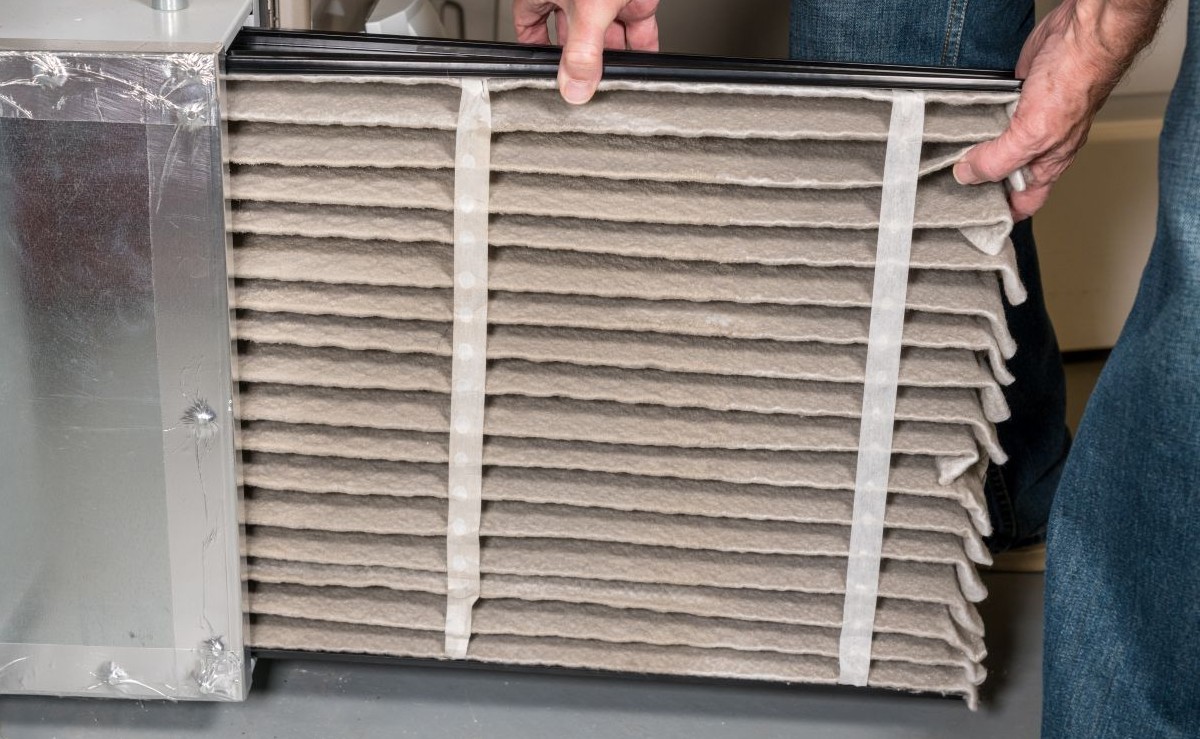
The filters in a medical office HVAC system are the difference between recirculating contaminated air and cleaning it. Standard commercial filters capture large dust particles but let finer, more dangerous particles pass straight through. Higher-rated filtration (measured on the MERV scale, and in some clinical spaces HEPA filtration) captures far smaller particles — but only if the filters are the correct rating for the space, installed properly, and changed on schedule. A high-rated filter left in place for six months past its interval becomes clogged, restricts airflow, and stops protecting anyone.
Humidity control
Humidity is the quietest of the four and often the most neglected. Air that’s too humid encourages mold growth inside ductwork, on ceiling tiles, and around fixtures — a serious problem in the Florida climate, where outdoor humidity works against every building year-round. Air that’s too dry irritates airways and can affect how long certain pathogens survive in the air. Clinical environments generally aim to hold relative humidity within a controlled band, and hitting that band consistently requires equipment that’s sized right and maintained well.
Pressure relationships
In many clinical spaces, the direction air flows between rooms is deliberate. Certain rooms are kept at positive pressure so air flows out when the door opens (keeping contaminants from drifting in), while others are kept at negative pressure so air flows in and is exhausted rather than escaping into shared corridors. When a system falls out of balance — often after a renovation, a filter change that alters airflow, or a failing component — those pressure relationships quietly reverse, and air starts moving in exactly the wrong direction.
What happens when HVAC maintenance slips
None of these functions fail loudly. That’s what makes deferred HVAC maintenance so risky in a healthcare setting. A few of the ways it shows up:
- Clogged filters restrict airflow. The system works harder, exchanges less air, and filters less effectively — while your energy bill climbs and the equipment wears out faster.
- Dirty coils and drain pans grow mold and bacteria. The evaporator coil and condensate drain are dark, damp, and rarely inspected — ideal conditions for microbial growth that then gets distributed through the ducts every time the system runs.
- Humidity creeps up unnoticed. Without monitoring, a practice often doesn’t realize humidity has been out of range until mold appears on a ceiling tile or staff start reporting a musty smell.
- Pressure relationships drift after a change. A renovation, a new tenant next door, or a swapped filter type can shift the balance, and without commissioning or verification, no one knows.
- A minor issue becomes an emergency. A worn part on a rooftop unit in July doesn’t wait for a convenient time to fail. It fails during patient hours, and now you’re canceling appointments in a waiting room that’s climbing past 80 degrees.
For a medical practice, any of these translates directly into disrupted patient care, a first impression that undercuts trust, and — in the worst cases — a compliance or health finding. A practice that can’t guarantee a safe, controlled environment is exposed in a way that a comfortable-but-not-clinical business simply isn’t.
The preventive maintenance that keeps HVAC doing its job
The good news is that HVAC problems are among the most preventable in the building. The system rewards a consistent schedule and punishes neglect, which makes it a textbook case for a preventive maintenance program rather than a repair-when-it-breaks approach. A well-run medical office HVAC program generally includes:
Filter changes on a defined interval. Not “when someone remembers,” but a documented schedule matched to the filter rating and the office’s patient volume. High-traffic offices and higher-rated filters need more frequent changes.
Coil and condensate drain cleaning. The parts most responsible for microbial growth are the ones that get inspected least. Scheduled cleaning keeps coils efficient and drains clear, preventing both mold growth and the water damage a clogged drain pan can cause.
Humidity and airflow verification. Periodically confirming that humidity sits within range and that rooms are getting adequate air exchange — rather than assuming the system that was balanced two years ago still is.
Seasonal system checks. In Florida, the cooling season is nearly year-round and the load on the equipment is relentless. Pre-season checks of refrigerant, electrical components, thermostats, and moving parts catch the small failures before they become July emergencies.
Documentation of every visit. In a clinical setting, the maintenance record isn’t just an internal note — it’s evidence that the environment is being managed responsibly. Timestamped records of filter changes, cleanings, and readings are exactly what you want to have on hand during an inspection.
This is precisely the kind of recurring, documented work that tends to fall through the cracks when a practice manages facility upkeep through texts, sticky notes, and whoever-remembers-to-call-the-HVAC-guy. It’s also exactly what a structured preventive maintenance program is built to handle — recurring HVAC service scheduled in advance, performed by qualified crews, and documented in one place instead of scattered across inboxes.
How MedServ approaches HVAC in medical facilities
MedServ treats HVAC as what it is in a medical office: a clinical-environment system that needs to be scheduled, tracked, and documented, not just fixed when it fails. Through the MedServ platform, a practice can set recurring preventive maintenance for HVAC alongside its other facility systems, submit a work order the moment something feels off, watch the status move from submitted to scheduled to completed, and keep every filter change and coil cleaning in a service history that’s ready when an inspector asks.
Behind the platform are real, licensed crews — not a directory of numbers you have to chase. When a rooftop unit goes down in the middle of a Tampa summer, the request follows an established process to the right technician with the context they need, and your staff can see where it stands without picking up the phone. For practices with multiple locations, that same visibility spans every office, so a regional operator can see at a glance which sites are current on HVAC service and which are overdue.
That combination — a coordination platform plus the crews who do the work, tuned specifically for medical practices and clinical environments — is what separates managed facility maintenance from a one-off HVAC repair call.
The bottom line for practice managers
Your HVAC system is doing infection-control work every hour you’re open, whether or not anyone is managing it that way. Filters, coils, humidity, and pressure quietly shape how safe your office is — and every one of those variables responds to a preventive maintenance schedule and degrades without one. In the Florida climate, where humidity and cooling load never really let up, the margin for neglect is even thinner.
The practices that stay ahead of it aren’t the ones with the newest equipment. They’re the ones treating HVAC as a scheduled, documented, non-negotiable part of running a clinical facility — and getting the follow-through handled so it doesn’t depend on someone remembering.
If your HVAC maintenance currently lives in someone’s memory rather than on a schedule, that’s worth fixing before the next Florida summer tests it. Schedule a walkthrough and we’ll show you how MedServ keeps HVAC and the rest of your facility running — scheduled, tracked, and documented in one place.
FAQ
How often should a medical office change HVAC filters? It depends on the filter rating and the office’s patient volume, but medical offices generally change filters more frequently than standard commercial spaces because of higher patient traffic and higher filtration ratings. The key is a documented schedule matched to your specific system rather than changing filters only when someone notices a problem.
What MERV rating does a medical office need? The right rating depends on the space and how it’s used, with clinical areas often requiring higher filtration than waiting rooms or offices, and some specialized spaces requiring HEPA. The filter also has to be compatible with what the system was designed to handle, which is why filter selection is best confirmed by a qualified technician rather than guessed.
Can HVAC problems really affect infection control? Yes. Ventilation, filtration, humidity, and pressure relationships all influence how airborne particles move through a medical office and how well they’re removed from the air. When any of these drift out of range, infection risk rises even if surface cleaning is perfect.
Why does humidity matter so much in a Florida medical office? Florida’s year-round outdoor humidity puts constant pressure on building systems. Indoor air that runs too humid encourages mold growth in ductwork and around fixtures, which is both a health concern and a source of costly damage — making humidity control and monitoring especially important in this climate.
What’s the difference between HVAC repair and an HVAC preventive maintenance program? Repair is reactive — you call when something breaks. A preventive maintenance program is proactive: filter changes, coil cleanings, and system checks scheduled in advance and documented, so problems are caught before they cause downtime or an infection-control issue.