A medical office depends on more than providers, staff, scheduling, and equipment. The facility itself plays a major role in patient experience, staff efficiency, safety, comfort, and daily operations.
When maintenance is handled reactively, small problems can turn into expensive repairs, patient complaints, staff frustration, and avoidable downtime. A leaking sink, damaged flooring, flickering lights, uncomfortable exam room, or recurring HVAC issue may seem minor at first, but these problems can affect the way patients and staff experience the practice.
For medical offices in Florida, maintenance planning is especially important. Heat, humidity, storms, heavy patient traffic, and multi-tenant medical buildings can all create facility issues that need to be addressed before they become larger problems.
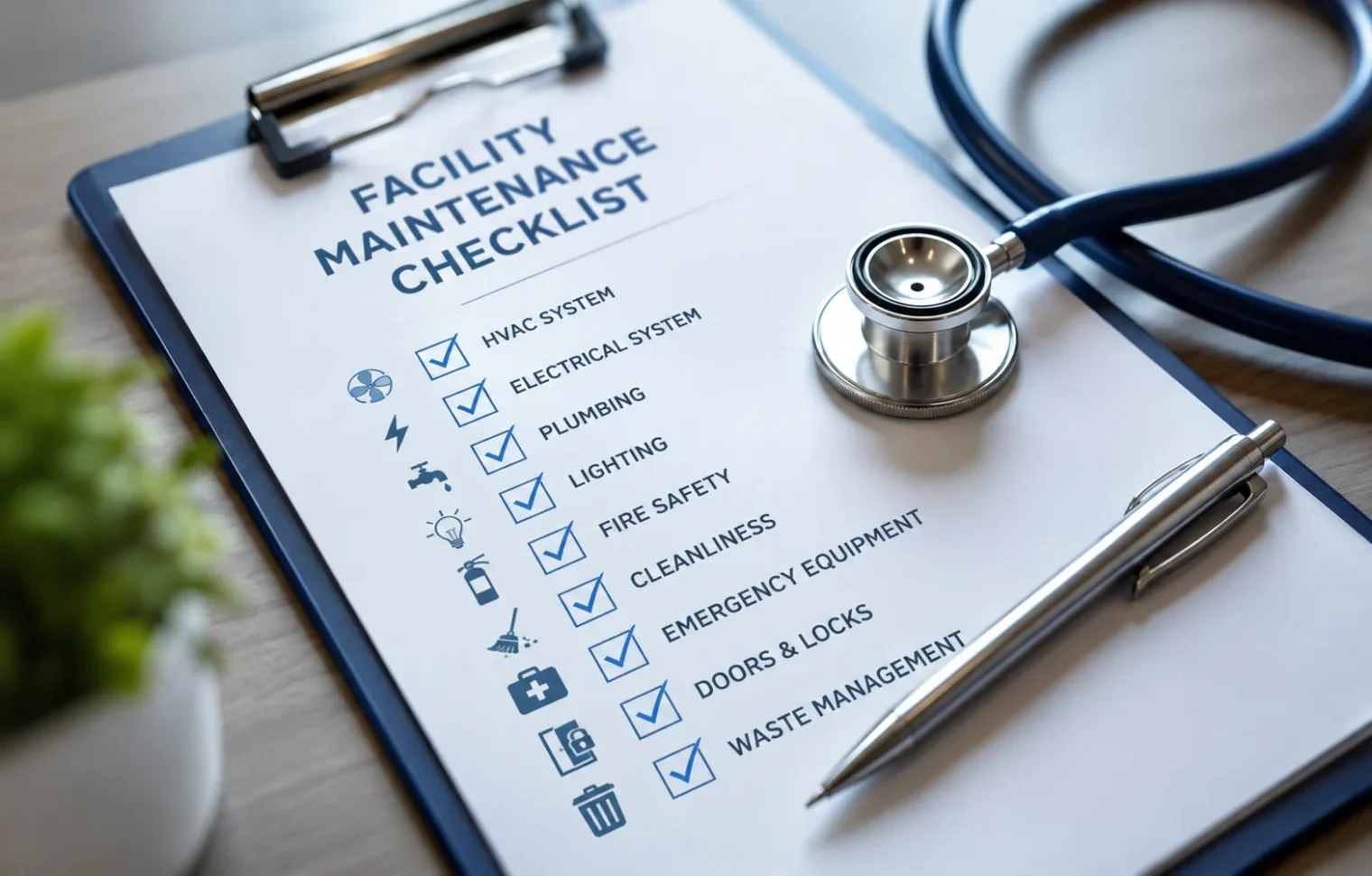
This checklist is designed to help practice owners, administrators, and office managers think through monthly, quarterly, and annual medical office maintenance tasks.
Why Medical Office Maintenance Matters
Medical offices are different from standard commercial spaces. A normal office may be able to work around small building issues for a while. A medical practice usually has less flexibility.
Facility problems can affect:
- Patient comfort
- Staff productivity
- Exam room availability
- Provider schedules
- Equipment access
- Infection control expectations
- Building appearance
- Safety and accessibility
- Maintenance costs
- Patient confidence
Patients notice the condition of a healthcare space. A clean, well-maintained office helps create confidence before the patient ever sees the provider. On the other hand, damaged flooring, stained ceiling tiles, worn paint, broken fixtures, poor lighting, or uncomfortable temperatures can make the practice feel neglected.
A proactive medical office maintenance plan helps prevent small issues from becoming larger operational problems.
Monthly Medical Office Maintenance Checklist
Monthly maintenance should focus on visible, high-use, and patient-facing areas. These are the items most likely to affect the daily experience of patients and staff.
A monthly checklist may include:
- Inspect waiting room furniture for wear, damage, or stains
- Check flooring in waiting rooms, hallways, exam rooms, and staff areas
- Look for trip hazards, loose transitions, or damaged flooring
- Inspect walls, corners, and baseboards for scuffs or damage
- Check ceiling tiles for stains, moisture marks, or sagging
- Test interior and exterior lighting
- Replace burned-out bulbs
- Check restroom fixtures, sinks, faucets, toilets, and dispensers
- Inspect exam room cabinetry, counters, and doors
- Check door handles, locks, closers, and hinges
- Confirm that signage is clean, visible, and accurate
- Review patient flow areas for clutter or obstruction
- Inspect storage rooms for overcrowding or blocked access
- Check for unusual odors, moisture, or signs of leaks
- Review any recurring staff-reported facility issues
Monthly maintenance does not always require major repairs. Often, the value is in catching problems early.
For example, a small ceiling stain may point to a roof, HVAC, or plumbing issue. A loose floor transition may become a trip hazard. A flickering light may seem minor, but it can make an exam room feel uncomfortable or poorly maintained.
Quarterly Medical Office Maintenance Checklist
Quarterly maintenance should go deeper than monthly walkthroughs. These tasks help identify patterns, prevent repeat problems, and keep the office operating smoothly.
A quarterly checklist may include:
- Review HVAC performance and recurring temperature complaints
- Inspect air vents, returns, and thermostats
- Check filters and confirm replacement schedules
- Inspect plumbing under sinks and around fixtures
- Review electrical outlets, switches, and visible cords
- Inspect exterior walkways, parking areas, ramps, and entry points
- Check exterior signage and lighting
- Inspect doors, automatic entry systems, and access controls
- Review ADA accessibility items such as ramps, door clearances, and restroom access
- Inspect staff break rooms and back-of-house areas
- Review vendor performance and open maintenance tickets
- Check for recurring issues across multiple locations
- Review janitorial concerns and facility cleanliness patterns
- Inspect waiting room, front desk, and checkout areas for wear
Quarterly reviews are especially helpful for multi-location practices. One office may report a problem as a one-time issue, but when several locations have similar problems, it may point to a larger maintenance pattern.
This is where medical office facility management becomes valuable. Instead of reacting to every issue separately, the practice can track problems, coordinate vendors, and plan repairs more strategically.
Annual Medical Office Maintenance Checklist
Annual maintenance should focus on long-term facility planning, larger repairs, vendor review, and budgeting.
An annual checklist may include:
- Review the full condition of the medical office
- Create a list of needed repairs and improvements
- Inspect flooring condition and replacement needs
- Review paint, wall protection, and finish condition
- Inspect cabinetry, counters, millwork, and built-in storage
- Review HVAC service history and recurring issues
- Inspect plumbing systems and fixtures
- Review electrical needs for equipment, workstations, and exam rooms
- Inspect exterior building elements if tenant responsibility applies
- Review lease responsibilities for repairs and maintenance
- Confirm vendor contracts and service performance
- Budget for upcoming repairs, renovations, or equipment-related changes
- Review patient complaints related to the facility
- Review staff feedback about workflow and space issues
- Identify rooms or areas that may need renovation
Annual maintenance planning is also a good time to decide whether the practice needs simple repairs, a cosmetic refresh, or a larger medical office renovation.
For example, if exam rooms are constantly being patched, cabinets are failing, flooring is worn, and staff workflow is inefficient, it may be more cost-effective to plan a renovation instead of continuing to repair the same problems.
Florida-Specific Maintenance Considerations
Medical offices in Florida have facility concerns that may not be as urgent in other regions. Heat, humidity, storms, and heavy HVAC demand can all affect building performance.
Florida medical offices should pay close attention to:
- HVAC performance
- Humidity concerns
- Water intrusion
- Roof leaks
- Exterior drainage
- Storm preparation
- Emergency lighting
- Backup plans for facility disruptions
- Mold or moisture warning signs
- Door seals and entry points
- Exterior signage and lighting
- Landscaping near entrances and walkways
Humidity and moisture should be taken seriously. Even small leaks or persistent damp areas can create bigger maintenance problems if ignored.
Practices in Tampa Bay, Clearwater, St. Petersburg, Brandon, Wesley Chapel, Sarasota, Lakeland, and surrounding Florida markets should also think about hurricane season before storms are already approaching.
Hurricane Season Maintenance Checklist for Medical Offices
Florida medical offices should review hurricane readiness before the busiest part of storm season.
A hurricane season checklist may include:
- Review emergency contact information for vendors
- Confirm who is responsible for storm preparation
- Inspect exterior doors and windows
- Check roof or ceiling areas for existing leak signs
- Review exterior signage and loose exterior items
- Confirm drainage areas are clear
- Protect important documents and facility records
- Review backup communication plans
- Confirm after-storm inspection procedures
- Identify vendors for urgent repairs
- Review insurance and landlord responsibilities
- Plan for patient communication if the office must close temporarily
A storm plan should not be created at the last minute. Medical practices need to know who to call, what to inspect, and how to reopen safely after a weather event.
Common Medical Office Maintenance Problems
Many medical office maintenance issues are predictable. The key is to identify them early and prevent them from turning into larger disruptions.
Common problems include:
- HVAC complaints from patients or staff
- Restroom plumbing problems
- Damaged flooring
- Loose baseboards or wall protection
- Worn paint in hallways and exam rooms
- Cabinet doors and drawers that no longer function properly
- Lighting issues in exam rooms and waiting areas
- Ceiling tile stains
- Door hardware problems
- Exterior lighting outages
- Water intrusion or moisture concerns
- Delayed vendor response
- Recurring repairs with no long-term solution
When these issues are tracked consistently, the practice can make better decisions about repairs, vendor coordination, and future renovations.
Maintenance for Multi-Location Medical Practices
Multi-location medical practices have an additional challenge: consistency.
One office may be well maintained while another slowly falls behind. Different vendors may handle different locations. Staff may report problems in different ways. Some issues may get fixed quickly, while others remain unresolved for weeks.
A centralized maintenance process can help with:
- Tracking open maintenance requests
- Prioritizing urgent repairs
- Coordinating vendors
- Comparing issues across locations
- Planning larger repairs
- Reducing duplicate work
- Improving communication with office managers
- Creating a consistent patient experience
For growing practices, facility maintenance should not depend only on whoever happens to notice a problem first. A clear process helps protect the practice, the patient experience, and the brand.
When Maintenance Becomes Renovation
Not every facility issue should be handled as a repair. Sometimes recurring maintenance problems are a sign that the space needs a larger update.
Maintenance may become renovation when:
- The same issues keep coming back
- Flooring, cabinetry, or finishes are beyond repair
- Exam rooms no longer support the way providers work
- Patient flow is inefficient
- The front desk or checkout area creates bottlenecks
- The office looks outdated compared to the quality of care provided
- Staff workarounds have become normal
- The practice is adding providers or services
- Repairs are becoming more expensive than improvements
This is why maintenance and renovation should be connected. A good facility partner can help determine whether a problem should be repaired, replaced, or planned as part of a larger medical office renovation.
How MedServ Helps Medical Practices Maintain Their Facilities
MedServ helps medical practices improve, renovate, and maintain healthcare spaces throughout Tampa Bay and Florida.
Our work is focused on medical facilities, which means we understand that maintenance is not just about fixing a problem. It is about keeping the practice operating smoothly, reducing disruption, protecting the patient experience, and helping office managers stay ahead of facility issues.
MedServ can help with:
- Medical office maintenance planning
- Facility walkthroughs
- Repair coordination
- Vendor coordination
- Multi-location maintenance support
- Minor construction and improvements
- Renovation planning
- Exam room and front desk updates
- Facility issue tracking
- Long-term improvement planning
Whether your practice needs help with one location or several, a proactive maintenance plan can reduce stress, prevent avoidable disruptions, and help your office feel more professional for patients and staff.
Medical Office Maintenance Checklist Summary
A strong medical office maintenance plan should include monthly, quarterly, and annual reviews.
Monthly tasks help catch visible problems quickly.
Quarterly tasks help identify patterns and prevent recurring issues.
Annual tasks help with budgeting, long-term planning, and deciding when repairs should become renovations.
For Florida medical offices, maintenance planning should also include HVAC performance, moisture prevention, storm readiness, and hurricane season preparation.
The best maintenance plan is not just a checklist. It is a system for keeping the practice running smoothly.
A medical office should have a basic maintenance walkthrough at least monthly, with deeper quarterly reviews and a more complete annual facility assessment. High-traffic practices or multi-location groups may need more frequent checks.
Common medical office maintenance issues include HVAC complaints, plumbing problems, worn flooring, damaged walls, lighting issues, ceiling tile stains, door hardware problems, cabinetry wear, and recurring vendor delays.
Medical offices have patient care areas, exam rooms, equipment needs, accessibility concerns, staff workflow requirements, and higher expectations for cleanliness and comfort. Facility problems can directly affect patient experience and daily operations.
A repair may be enough for an isolated issue. However, if the same problems keep returning, finishes are worn out, patient flow is poor, or the space no longer supports the practice, renovation may be the better long-term solution.
Yes. MedServ helps medical practices throughout Tampa Bay and Florida with facility maintenance planning, repairs, vendor coordination, renovation planning, and ongoing healthcare facility support.